Blog
Short, snappy articles full of practical communication tips and insights.

View posts per topic
- 2026 9
- accessibility 5
- apac 1
- artificial intelligence 29
- audience 143
- back to office 2
- behavioural science 4
- benefits 1
- body language 1
- book writing 1
- brand 11
- business 34
- business tips 80
- career 4
- case study 3
- change 61
- change communication 45
- change management 1
- channels 17
- charity 1
- communication tips 181
- confidence 6
- content 71
- corporate comms 127
- crisis 11
- culture 2
- cyber 1
- cyber attack 1
- data 1
- digital 5
- disaster 1
- dyslexia 1
- engagement rates 1
- enterprise agreements 1
- eofy 1
- event management 1
- evolve 1
- evp 2
- external comms 68
- feedback 32
- flexible 1
- funny 1
- future 1
- global 2
- guide 8
- hiring 1
- horizon scan 1
- iabc 1
- improv 1
- internal comms 159
How communications plays a role in psychological safety at work
Psychological safety has become a familiar term in workplace conversations, especially with the introduction of psychosocial hazard legislation here in Australia. At its simplest, psychological safety is about whether people believe they can express themselves, admit mistakes, ask questions, raise concerns and disagree without being punished, humiliated or unfairly judged. It doesn't mean everyone has to agree, and it certainly doesn't mean everyone needs to feel comfortable all the time. So, how do we create that?
What's the difference between change management and change communication?
Change management and change communication are closely connected, sure, but they are distinct disciplines. Understanding the difference matters because successful organisational change requires both, where you’re able to work together, but do different jobs. So, what’s the difference between change management and change communication?
Does brand actually matter in internal communications?
Does brand actually matter in internal communications? Yes! It does, and most likely more than you think. Internal communications and consistency of brand are critical to ensuring everyone is on the same page… so how do you ensure it remains consistent? Find out now.
The business communication skills we all need
Communication in business has changed significantly. There are more channels, more technology, more information and now more AI tools than ever before which means the ability to write a grammatically correct email is no longer enough. In fact, AI can do a pretty good job of that for us. The real communication challenge is knowing what to say, who needs to hear it, how they need to hear it and what needs to happen as a result. So, what are the business communication skills we all need?
Helping people navigate change using communications
The goal of change communication is to ultimately, help people understand what’s happening, make sense of what it means for them and navigate what comes next. So, how do we help people navigate change using communications?
How to give your employees a reason to embrace change, not resist it
When we describe someone as “change resistant”, we can easily make the assumption that the problem sits with them. What if… what we’re calling resistance is actually simply feedback? Learn how to give your employees a reason to embrace change, rather than resist it.
What is horizon scanning for a communications professional?
Communication professionals spend much of their time responding to what has already happened. While that's an important part of our role, it also means we're often helping organisations navigate change after decisions have been made, rather than helping them prepare for what's coming next. Which is where horizon scanning comes in.

How storytelling builds trust and credibility
Today, almost anyone can generate a polished article, write a LinkedIn post or even draft an entire book in a matter of minutes. Information has become abundant, content is everywhere and while that's made knowledge more accessible than ever, it's also made it much harder to stand out. Especially in the book-writing space. So how do we stand out? We get back into storytelling to build trust and credibility.

Why trust matters more than expertise in the workplace now
It wasn't that long ago that expertise was enough to set you apart; but we're not working in that world anymore. With AI these days, it's becoming increasingly difficult to know who or what to believe. So if everyone can sound like an expert, what actually makes someone worth listening to? Trust. So, we’re exploring why trust matters more than expertise in the workplace now.
How to use AI and technology to complement your communications work
Every week seems to bring another story about a new AI tool, another company automating work or another prediction about the future of work. It's easy to see why so many people are wondering where they fit into an AI-enabled workplace. Instead of asking whether AI will replace communicators, we should be asking how it can help us remove repetitive work, improve the way we communicate and free up more time for the strategic thinking, creativity and relationship-building that only humans can provide. So, where should communicators start?

Why your town halls aren’t effective
Town halls have become the default answer to almost every communication challenge. But here's the question: are they actually working? In this blog, we look at why so many town halls miss the mark (why your town hall sucks) and what communicators should be measuring instead.
Why communicators need to start thinking beyond human audiences
Remember when SEO felt like the answer to everything? The idea was simple: if people could find you, they could understand you… but that assumption is changing. People are no longer searching in the traditional way, they’re turning to tools like ChatGPT, Gemini and Claude to summarise, compare and recommend information for them. So, how do we think for an AI audience?
Why people resist change and how to navigate it with communication
A compelling case for change usually starts by giving people context. We have to give them the why; and to do that, we need to understand why people resist change and how to navigate it with communication.
The communications skills that matter most right now
For years, many communication functions have been measured by output: campaigns delivered, content produced, channels managed, messages written. Unfortunately for us, AI is accelerating a shift whereby organisations are increasingly questioning whether value comes from producing communication, or from shaping outcomes. So, what comms skills matter most right now?

The biggest risk for a career in communications
If you're working in communications right now (or you want to), you've probably found yourself wondering what the future holds for the profession. So it’s not really surprising when you see this question keep popping up in conversations across the industry: will AI take our jobs? The real risk isn't AI itself, but standing still while everything around us changes because of it. What’s the biggest risk for a career in communications?
How to speak more confidently in front of the media, public and during presentations
You can be the smartest person in the room and still completely lose your message the moment a microphone appears. So… what actually separates confident communicators from nervous ones, and how can we use these traits or skills to become more confident in speaking to the media, public or even just during a presentation? We’ve got some tips.
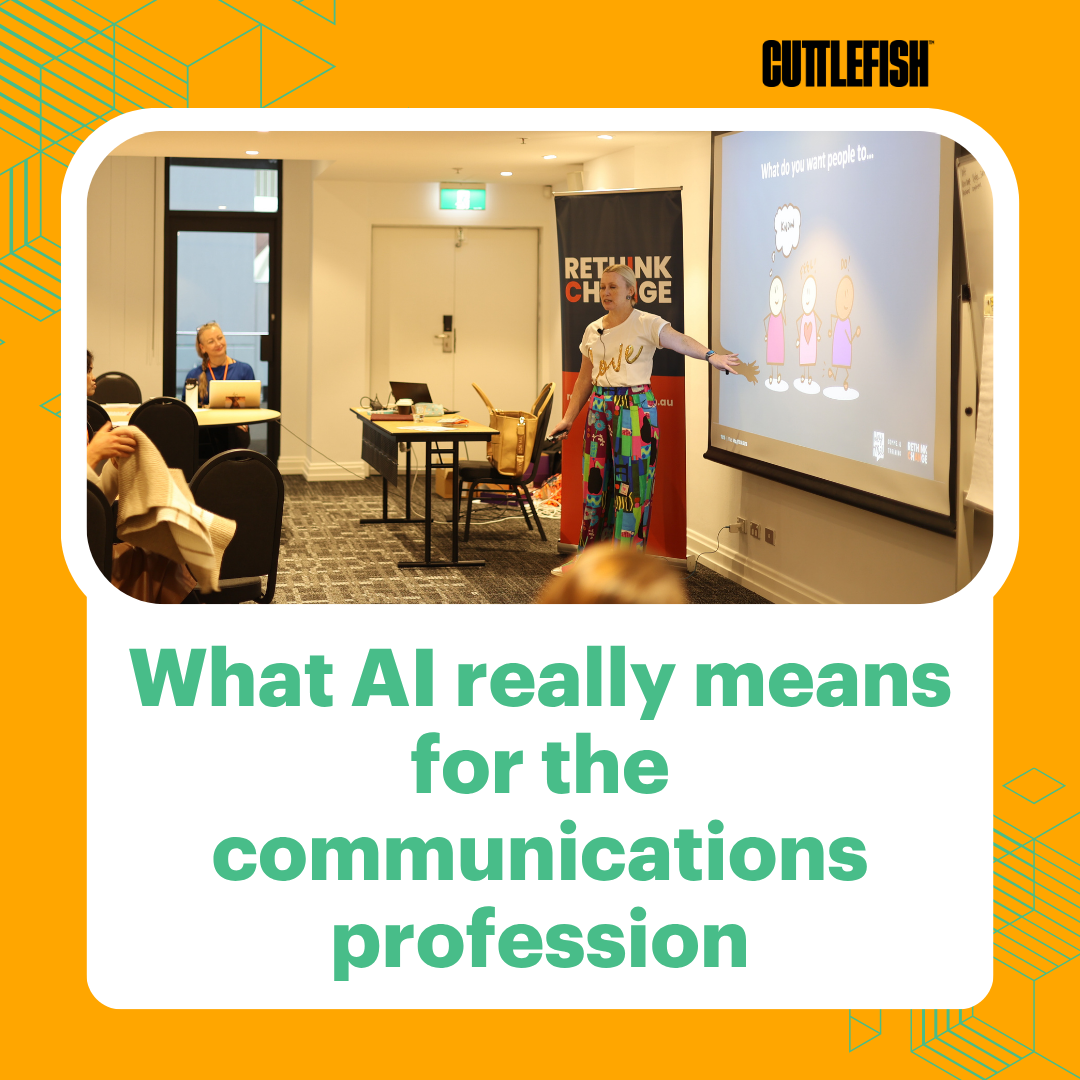
What AI really means for the communications profession
For years, communication roles have often been heavily associated with outputs like writing newsletters, drafting CEO emails, producing social media content, preparing presentations or managing internal updates. While those tasks still matter, AI is rapidly changing how they are produced and how quickly, too. So: what does AI really mean for communications professionals?
How to build a strong business reputation in the age of AI
When leaders hear the word “reputation,” many think about media coverage, public relations, and crisis response. While these are certainly part of the equation, they represent only a small piece of the bigger picture. Reputation is formed through every interaction people have with your organisation. So, how do you build a strong business reputation in the age of AI?
When communication isn’t the answer (and why that matters)
Often, when something isn’t working in a business, or people are frustrated, engagement is slipping, or there’s a bit of noise building in the background, the first answer people run to is: let’s communicate more. But honestly, not every problem is a communication problem, and even moreso, not every problem can be solved with more communication. So, when is communication not the answer and why does that matter?
How to make change feel safe using communications
Clear communication isn’t enough to drive change. People don’t adopt change simply because it makes sense, they adopt it because it feels safe and acceptable to them. So how do we make the change safe, and how do we find the acceptable outcome for our people?