

Communication training for WHS and safety teams
A practical, four-hour workshop that helps safety professionals cut through, influence leaders and workers, and have the conversations that keep people safe.
4 hours | Up to 15 people | In person or online | $6,000 + GST
Your safety message is only as good as the way it lands.
Safety teams know what needs to happen. The hard part is getting busy, sceptical or overloaded people to listen, believe it and act on it. Safety alerts get skimmed. Toolbox talks become a tick-box. Procedures change, and people keep doing it the old way. And safety professionals often have to influence leaders and crews they don't manage.
At the same time, the job has grown. WHS laws across Australia now require organisations to manage psychosocial hazards, and consulting workers is a legal duty. Both depend on communication that people trust.
This workshop gives your safety team practical, behavioural science-based tools to make their messages stick and their conversations count.
At the end of this workshop, your team will:
Understand why people tune out safety messages, and how to cut through
Know how to tailor safety communication for different audiences, from executives to frontline crews
Build a communication rhythm for alerts, toolbox talks, pre-starts and campaigns that people actually engage with
Communicate changes to procedures, equipment and sites so people adopt them
Influence leaders and workers they don't manage
Handle challenging conversations, from pushback on new rules to calling out unsafe behaviour
Consult workers in a way that builds trust, not just ticks a box
Who should attend
WHS and safety advisors, coordinators and managers
HSEQ and risk teams responsible for safety communication
Health and safety representatives (HSRs) who consult and represent workers
Site supervisors and team leaders who run toolbox talks and pre-starts
New safety professionals building their influence
Suits construction, mining, resources, manufacturing, transport and logistics, utilities, agriculture, health, local government and any workplace where safety matters.
Course Outline
Module 1: Understanding your audience
How our brains process risk and why people tune out familiar warnings. Communication personality styles, and how workers, supervisors and executives respond to safety messages differently. How people react to change, from a new procedure or piece of equipment to a site restructure.
Module 2: Making safety messages stick
How to build a sustainable safety communication rhythm across alerts, toolbox talks, pre-starts, campaigns and consultation. Practical frameworks and behavioural science techniques to write messages people read, remember and act on, and to keep them fresh so they don't become background noise.
Module 3: Influence and challenging conversations
How to influence leaders and crews you don't manage, and frame safety in terms that matter to them. Tools for difficult conversations: pushback on new rules, "we've always done it this way", calling out unsafe behaviour, and following up after an incident in a way that's transparent, timely and thoughtful.
Module 4: Practice time!
Apply what you've learned to realistic safety scenarios, such as a crew resisting a new procedure or a supervisor who sees safety as red tape, or to one of your own situations.
Supporting your WHS obligations
Under Australia's model WHS laws, organisations have a positive duty to manage psychosocial risks, and a duty to consult workers and health and safety representatives on WHS matters. Many psychosocial hazards, such as poorly managed change, low role clarity and poor support, are at heart communication problems.
The skills in this workshop help safety teams communicate change clearly, consult workers meaningfully and build the trust that good safety culture depends on.

How the workshop runs
Four hours, in person at your workplace, site office, or another venue, facilitated by Mel Loy
Online option for teams spread across sites, delivered as shorter modules
Up to 15 people per workshop
Before the workshop: a short team survey and a planning meeting, so the content fits your agency
After the workshop: a follow-up meeting to share feedback and agree next steps
You'll take away: printed tools, a copy of the slides and optional Certificates of Completion
What our clients say about this training
I brought Mel in because our communication wasn’t landing with operations. We had good information, particularly on critical risk, but we were presenting it in a way that showed how much we knew rather than what we needed people to know.
Mel worked with our operational supervisors, who regularly speak to large crews at team meetings and pre-production meetings. Her frameworks are simple and they stick. PIE (Personal, Interesting, Easy) is now part of how our supervisors prepare.
What made the difference was that Mel used our own material. She took our critical risk data and our incident learning communications and worked through them with us, stripping each one back to the message that mattered most. Seeing our own work changed in front of us landed far better than any generic example would have. One of our lead HSE team members then took data that was mostly graphs and turned it into information that showed crews where risk needed to be better managed and prompted them to act on it. I’ve also noticed our emails getting shorter and clearer, and information is moving through the business better as a result.
Mel is a very engaging facilitator. She doesn’t talk at you. She asks questions that get you thinking critically about how you communicate and why your message isn’t landing. She’s warm, knows her subject and reads a room well. I’d recommend her to any leader or team whose messages aren’t getting through to the people doing the work.
Josh Bryant
General Manager – People, Risk and Sustainability, Mitchell Services
Investment
$6,000 + GST for up to 15 people.
This includes the planning meetings, team survey, workshop design, printed materials and facilitation. A 30% deposit secures your date, and the balance is invoiced after the workshop. Travel and accommodation outside Brisbane, including to regional and remote sites, are added to the final invoice.
FAQs
-
It's a four-hour workshop from Cuttlefish Communications that helps safety professionals make safety messages stick, influence leaders and workers, communicate change and handle challenging conversations.
-
Keep them short and specific, explain why they matter to the person hearing them, and use real stories rather than generic warnings. Vary how you deliver them so they don't become background noise, and check people have understood. The workshop gives you frameworks to do this consistently.
-
Frame safety in terms of what matters to your audience, such as getting the job done, looking after their crew or protecting the business. Build relationships before you need them, and listen to concerns before you push back. Module 3 practises exactly this.
-
Make them a conversation, not a lecture. Focus on one topic, use a real example from your site, ask open questions and give people time to share their own experience.
-
Many psychosocial hazards, such as poorly managed change and low role clarity, come down to communication. Explaining change clearly, consulting people early and being clear about roles all help reduce the risk.
-
Yes. Mel facilitates at workplaces and site offices across Australia, including regional areas. Travel and accommodation outside Brisbane are charged separately.
-
A pre-workshop team survey, planning and follow-up meetings, workshop design, slides, printed tools and facilitation by Mel Loy.
-
$6,000 + GST for up to 15 people. Travel and accommodation outside Brisbane are charged separately.
-
Give us at least 48 hours' notice and reschedule within three months. Cancellations need at least two weeks' notice, or the deposit is forfeited.
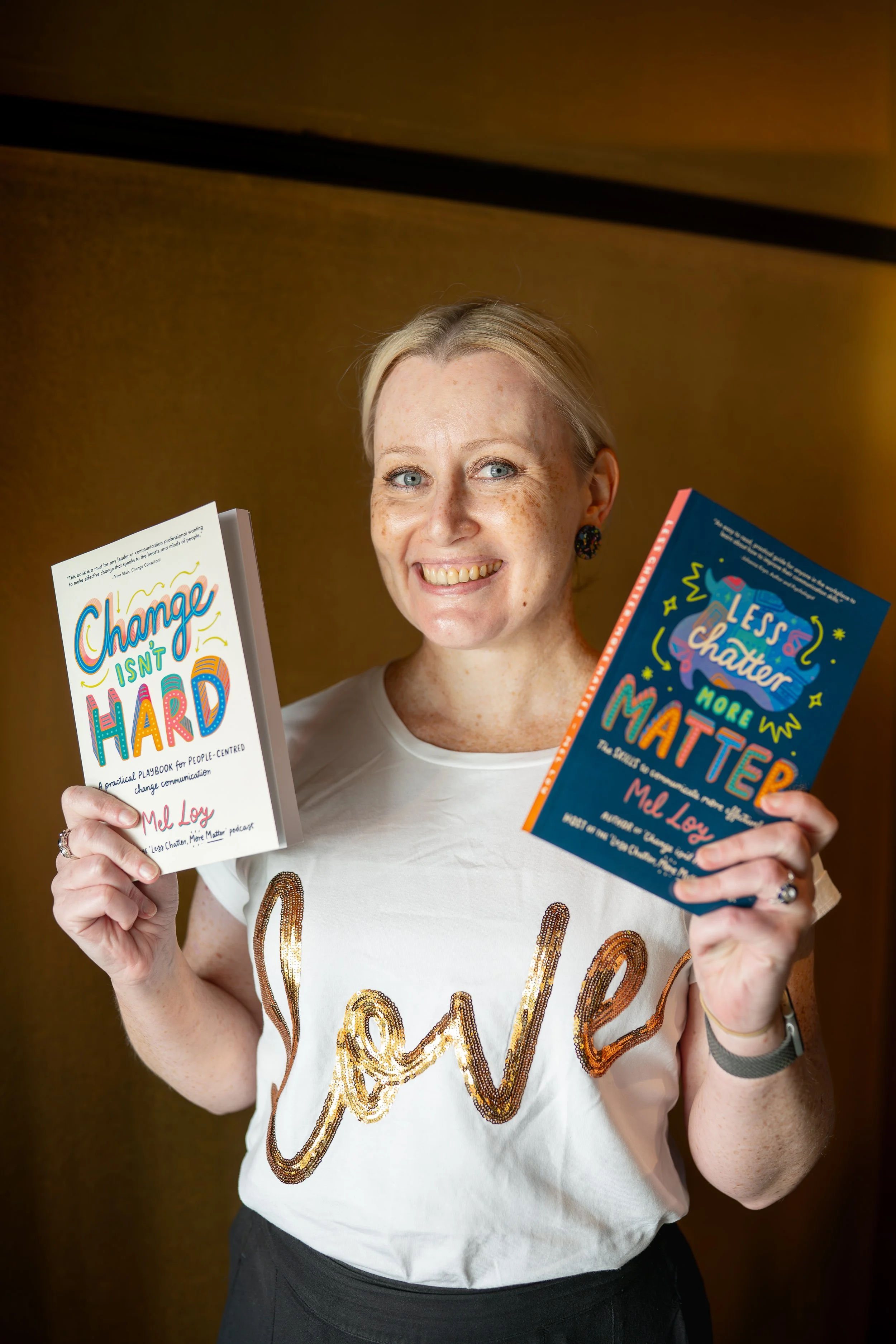
About your facilitator
Mel Loy is the founder of Cuttlefish Communications and has spent more than 20 years in senior communication roles, including in emergency services, construction and mining, where clear safety communication can be the difference between a good day and a bad one. She holds a Graduate Certificate in Behavioural Insights and the SCMP credential, and is the author of Change Isn't Hard and Less Chatter, More Matter. Mel specialises in internal, change, leadership and strategic communication.
Related training & services
Change Communication Skills Training: for teams rolling out new procedures, systems or sites
Leadership Communication Skills Training: for supervisors and site leaders
Research and Audits: find out how safety messages are really landing before you change them
Ready to make your safety messages count?
Book a non-obligation discovery call, or complete the form and we’ll be in touch.