

The HMC EPIC change communication framework
A practical, four-stage framework for communicating change so people understand it, accept it and act on it.
What is the EPIC Change Communication Framework
EPIC stands for Evaluate, Position, Implement, and Check. They’re four key milestones along the change communication journey. The framework consists of three core elements:
A process to follow, with activities within each step to complete
A set of tools and templates to use along the way
A set of guiding principles to apply to each deliverable.
EPIC is a cycle, not a one-off checklist. What you learn when you check feeds straight back into evaluating and adjusting your plan.
We know it works. Every one of our consultants uses the framework with our clients with great success. Not only does it help us deliver what they need, but it helps our clients to easily understand the journey we’ll be travelling together.
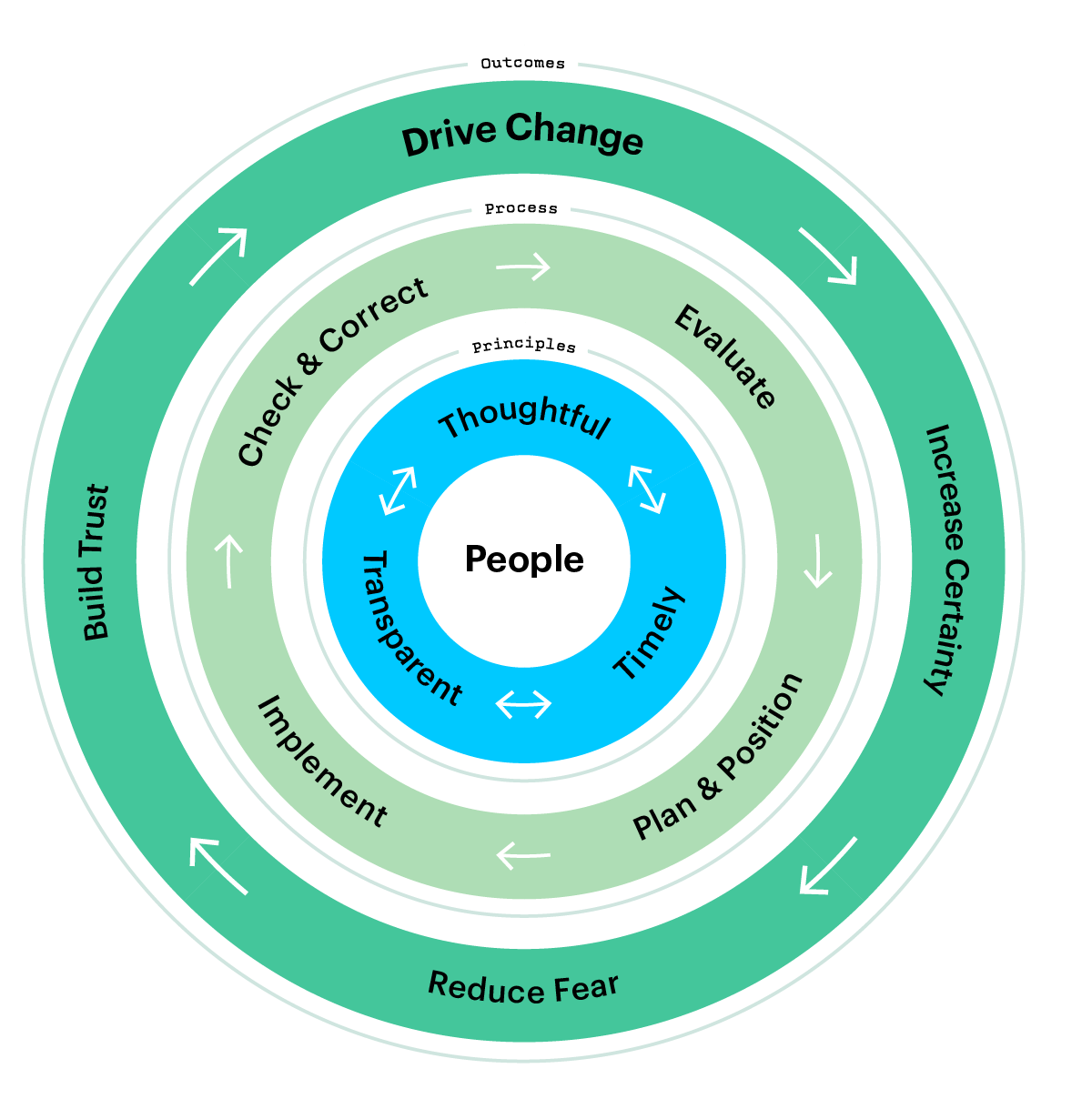
E: Evaluate
Before you communicate anything, understand the change and who it affects. Work out who is impacted, how, and how much: what changes for their role, responsibilities, team structure or way of working.
Key questions:
Who is affected by this change, and how much?
What will be different for them day to day?
What stays the same?
That last question matters. Telling people what isn't changing is reassuring when everything else feels uncertain.
You’ll finish with: a detailed communication brief, audience analysis, and frequently asked questions.
I: Implement
Put your plan into action. Support leaders to deliver their messages, update your channels and track when and how each message goes out. This stage is at its busiest around launch.
It also means being ready for how people react. Change brings up strong feelings, so leaders need to be prepared for questions, pushback and challenging conversations.
Key questions:
Are leaders ready and confident to have these conversations?
Are messages going out when and how we planned?
How are people responding?
You’ll finish with: a leadership communication briefing plan.
P: Position and plan
Prepare your messages and make a clear case for why the change is happening. Then set communication outcomes for each audience, based on what you want them to know, feel and do.
From there, write your strategy and plan. Your strategy is your overall approach to how you'll communicate. Your plan is the sequence of activities that puts it into action.
Key questions:
Why is this change happening, and why now?
What do we want each audience to know, feel and do?
Who should people hear from, and through which channels?
You'll finish with: key messages, communication outcomes for each audience, and a communication strategy and plan
C: Check & Correct
Measure whether your communication is working by comparing results against the outcomes you set. Then decide what to change, add or stop, and loop back to Evaluate to adjust the plan.
Key questions:
Do people know, feel and do what we hoped?
What's working, and what isn't?
What do we need to change in the next round?
You'll finish with: a measurement framework aligned to your communication outcomes.
How EPIC works
When EPIC helps most
Use EPIC for any change that affects how people work, including:
Restructures and new operating models
New systems, technology and AI tools
Mergers and acquisitions
Office moves and new ways of working
Policy, process and culture changes
It works for a single team or a whole organisation, and for change managers, communicators, project managers and leaders.
Change management vs change communication
EPIC focuses on the communication side of change: helping people understand, accept and act on it. It works alongside change management methods rather than replacing them. Read more in What's the difference between change management and change communication?
Learn to use EPIC
Change communication training with Cuttlefish Communications, delivered in-house or online for your team. Click here to find out more.
IABC APAC Academy courses in change communication, foundational and advanced, built around EPIC. Click here to find out more.
The Certified Change Communication Practitioner program, delivered through the Centre for Strategic Communication Excellence. Click here to find out more.
Mel's book, Change Isn't Hard, a practical playbook for people-centred change communication. Click here to find out more.

FAQs
-
EPIC stands for Evaluate, Position and plan, Implement and Check. These are the four stages of the EPIC Change Communication Framework (TM).
-
EPIC was developed by Mel Loy, founder of the Brisbane communication agency Cuttlefish Communications.
-
No. EPIC is a change communication framework. It focuses on how you communicate change, and works alongside change management methods.
-
No. EPIC is a cycle. The Check stage feeds back into Evaluate, so you keep refining your communication as the change progresses.
-
The EPIC Change Communication Framework is a trademarked asset. If you want to reference it in your organisation, you will need to credit it appropriately: Mel Loy, Cuttlefish Communication, and include a link to this page.
We do not recommend using the framework until you have done our training.
-
This is a self-paced course, so we recommend finding ways to keep yourself accountable to the learning - perhaps booking in time into your calendar each week, or getting a friend to sign up with you and you work through it together.
You also have access to a free 30-minute coaching call with Mel that you can use within six months of the purchase date of your course. And at any time during the course, if you have a question, please email hello@heymelcomms.training
Need help communicating a change?
We can run EPIC training for your team, or work alongside you to plan and deliver the communication for your next change.
Are you a change friend or foe?
Everyone responds to change differently, which is okay - we need different points of view on every team!
But how do you respond to change? Take our quick quiz and find out!

Change communication resources
Related blog posts


